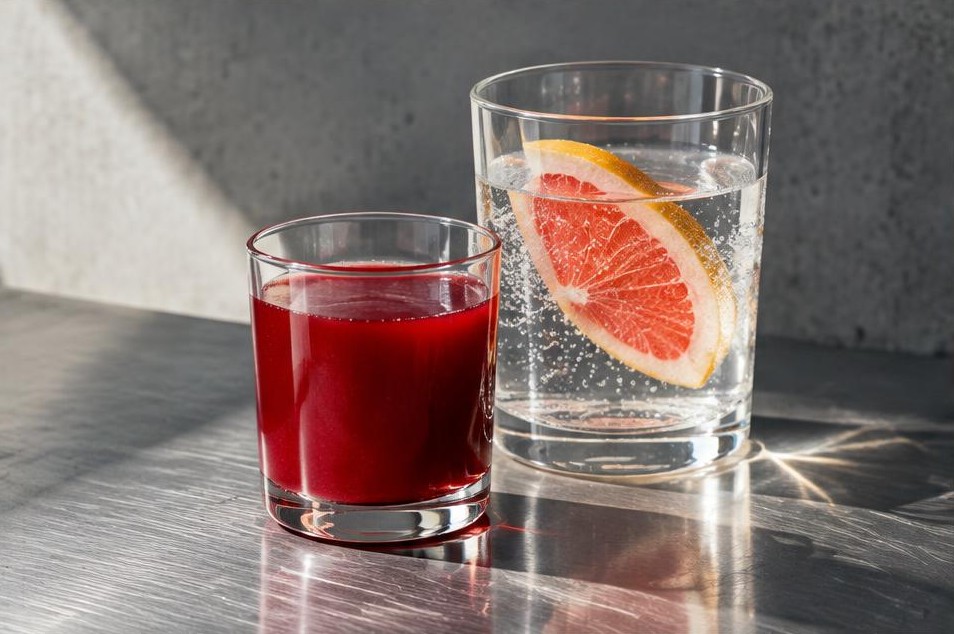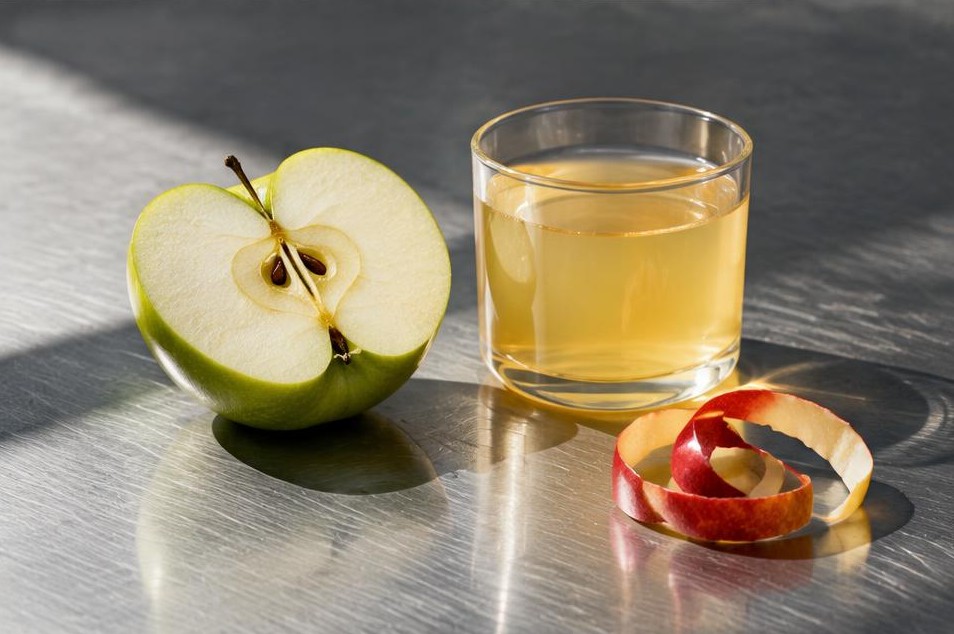
An apple can arrive at breakfast three ways. You can bite it, spoon it or drink it. A café could write the same ingredient on all three cards. Your stomach might give them different reviews.
In a study at Penn State, a research team brought 58 adults back for lunch once a week for five weeks. On different visits the first course was apple pieces, applesauce, apple juice or apple juice with added fibre. On a fifth visit the participants went straight to lunch. The four apple portions were matched for weight and energy. Fifteen minutes later, people could eat as much of lunch as they wanted. 1
People reported feeling fullest after the apple pieces, followed by the applesauce, then the two juices. When the first course was apple pieces, total energy eaten at that lunch, including the apple, was about 15% lower than on the day with no first course. Adding fibre to the juice failed to reproduce the fullness of eating the pieces. The time participants spent consuming the portions was controlled, too. An explanation as simple as taking longer to finish the apple would miss something in that result. 1
A later team looked inside the stomach. Eighteen healthy adults returned on three occasions for equal energy portions of whole apple, purée or juice. MRI scans tracked what happened over the next few hours. The average time for half the stomach contents to empty was 65 minutes after whole apple, 41 after purée and 38 after juice. The researchers found a clear difference between the whole fruit and each processed form on this measure. The three minute gap between purée and juice was too small to distinguish reliably. This was an experiment with apples in a small group. It cannot predict exactly how full someone will feel after a pomelo or a glass of pineapple juice. 2
That still leaves a perfectly good reason to order a juice at breakfast. You like the taste. Keep a place on the plate for fruit you can actually eat, especially if you are looking for something more filling. A menu can truthfully say “no added sugar”. That tells you about the recipe. The World Health Organization counts sugars naturally present in juice among the free sugars it recommends limiting, even when the recipe contains only the fruit. 3
For a familiar reference on portions, the UK’s NHS recommends a combined maximum of 150 millilitres of juice and smoothies a day, taken with a meal. That is UK guidance. A breakfast table does not need a nutrition label on every apple. It helps if there is still an apple on it. 4
- Julie E. Flood-Obbagy and Barbara J. Rolls. The effect of fruit in different forms on energy intake and satiety at a meal. Appetite, 2009
- Shanthi Krishnasamy and colleagues. MRI study of whole apples, purée and juice. Journal of Nutrition, 2020
- World Health Organization. Healthy diet, with its definition of free sugars
- NHS. What counts towards 5 A Day, including guidance on juice and smoothies