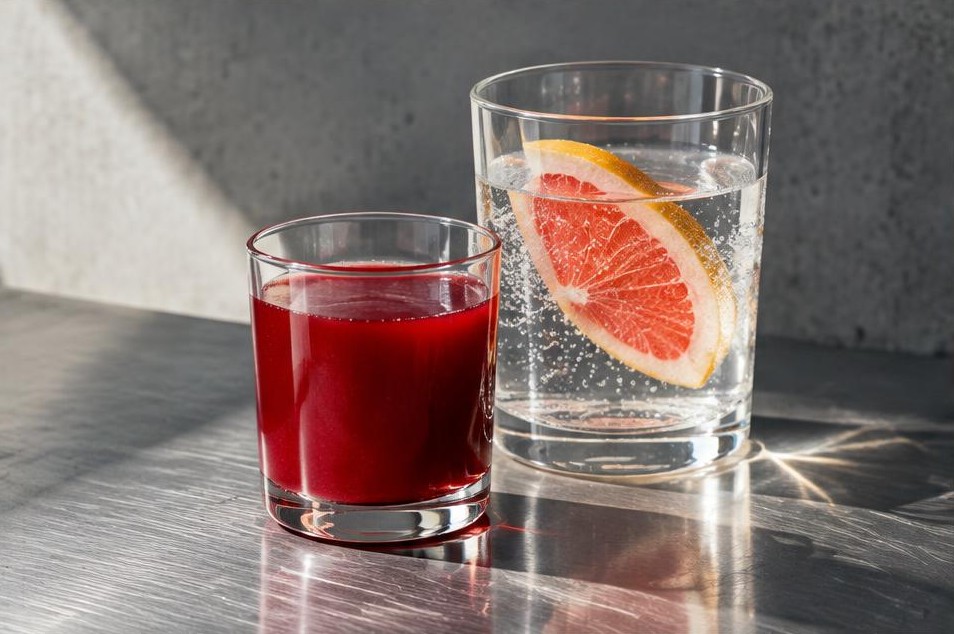
A guest wants to know what the pink juice tastes like. The question takes one mouthful to answer. A buffet that offers only a full glass has made a decision on the guest’s behalf. If the juice is sweeter than expected, the rest of that decision comes back on a tray.
There is research behind the idea of a smaller first helping. In an experiment published in 2013, Steffen Kallbekken and Håkon Sælen analysed records from 52 hotels. Seven changed the size of buffet plates, typically from 24 to 21 centimetres across. A different seven displayed signs telling diners they were welcome to return for more. The researchers estimated a 19.5% reduction in food waste for the plate intervention and a 20.5% reduction for the sign. Guest satisfaction with breakfast stayed broadly steady. The study measured restaurant food waste. It did not test glass sizes or establish how much juice a smaller glass might save. 1
There is a local reason to give breakfast a closer look. Patranit Srijuntrapun and Patinya Sukwong sampled waste from four types of hotel catering in and around Bangkok, including breakfast buffets and banquets. With four samples for each format, breakfast produced the greatest amount of edible waste per person in their study. The team collected waste from kitchens as well as discarded food from events. The finding points a hotel towards breakfast. It takes a separate count to tell whether its problem is at the table or still in the kitchen. 2
A hotel can run that count with a measuring jug. For several comparable mornings, record the number of breakfast guests, the amount of juice put out, what remains at the station and what comes back in glasses. Record spills separately. Keep water out of the juice tally. A team that only measures the jug at closing time can congratulate itself on emptying the dispenser while pouring half glasses down the sink.
Then offer a tasting glass beside the usual tumbler and make another helping visibly welcome. Keep the recipe and the position of the station the same. Compare the millilitres discarded per guest, alongside the number of glasses to wash and any queues or complaints. A fall in table waste with more left over in the jug suggests a change in the next morning’s batch size. A queue for refills suggests a change in service.
For the guest who knows exactly what they want, leave the tumbler where it was. For the curious one, the question was only ever what the pink juice tasted like. Give them a way to find out.