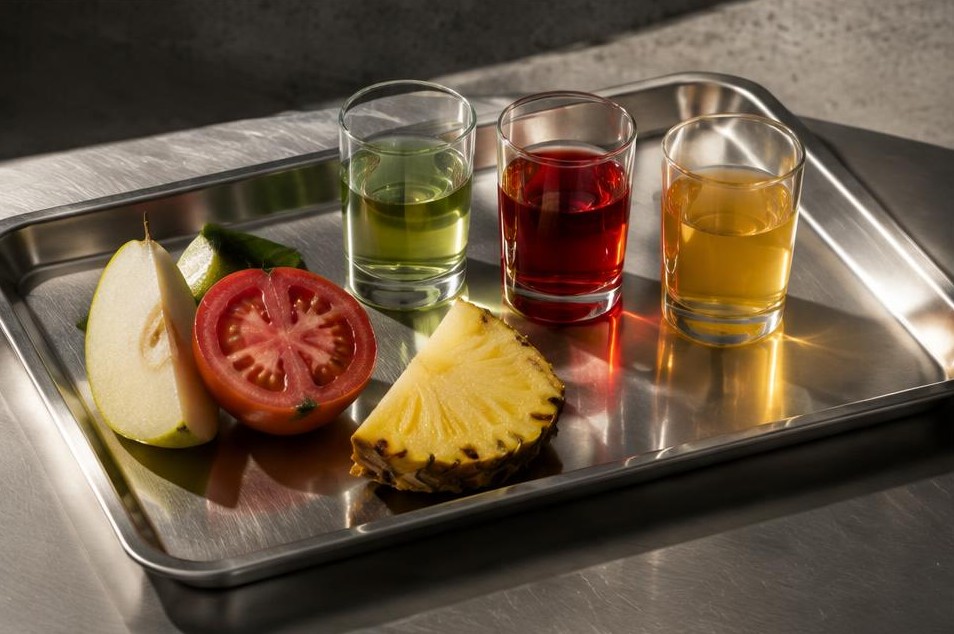
Suppose you want a drink to go with a plate of fried food. You remember eating a cold pear over the sink and you like the smell when the lid comes off a pot of toasted rice tea. The pear supplies a flavour you already want. The tea gives it somewhere unexpected to go. The food tells you when the drink has to prove itself. You have the beginnings of a recipe before you have thought of a name.
Two drink makers offer different ways to proceed from there. Julia Momosé, writing with Emma Janzen in The Way of the Cocktail, uses the changing seasons in Japan to organise drinks, including ones made without alcohol. A moment in the year can be reason enough to put something in a glass. In Liquid Intelligence, Dave Arnold treats quantities of water, sugar and acid as things a maker can adjust and measure. A memory gets you to the counter. A measure lets you come back. [1, 2]
Write a brief small enough to taste
Try this sentence on paper. “I’m making a drink for __, and the part I want them to remember is __.” For someone eating fried food, an answer might be “the smell of roasted rice when they put the glass down”. For someone arriving for dinner, it might be “tomato so cold they want a bite of bread”. Something as particular as that gives you grounds to leave half the cupboard alone.
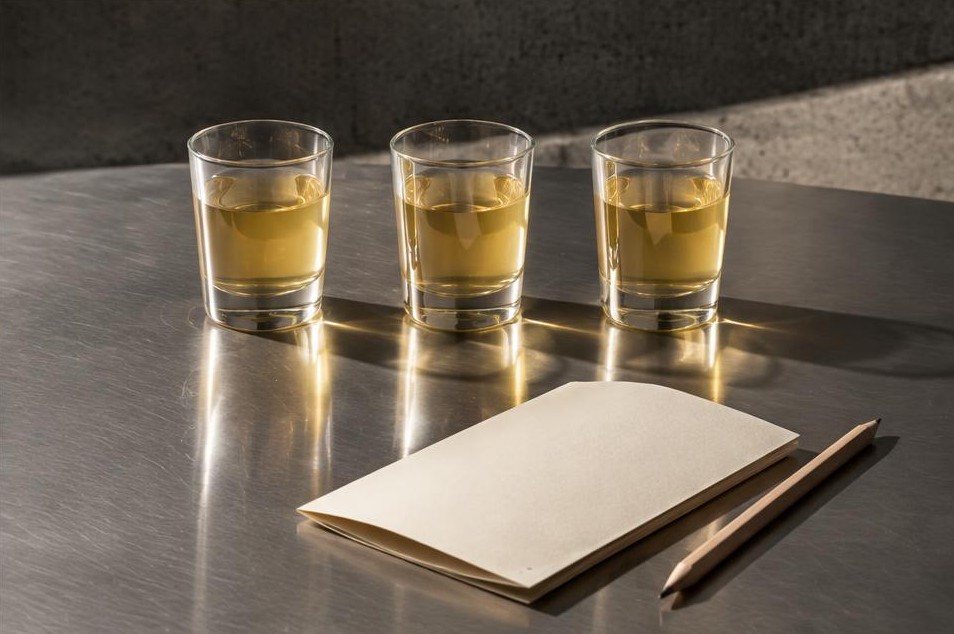
Gather two identical small glasses, teaspoons, a jug, a fine sieve and a scale or graduated measure. Use clean equipment, drinking water and washed produce. Start with chilled ingredients for the cold mixtures below. For the tea, brew according to its packet, strain and chill promptly. Work in small quantities and serve the drinks freshly made. The three formulas here are original starting points for comparison. Taste them with the fruit and tea you actually have.
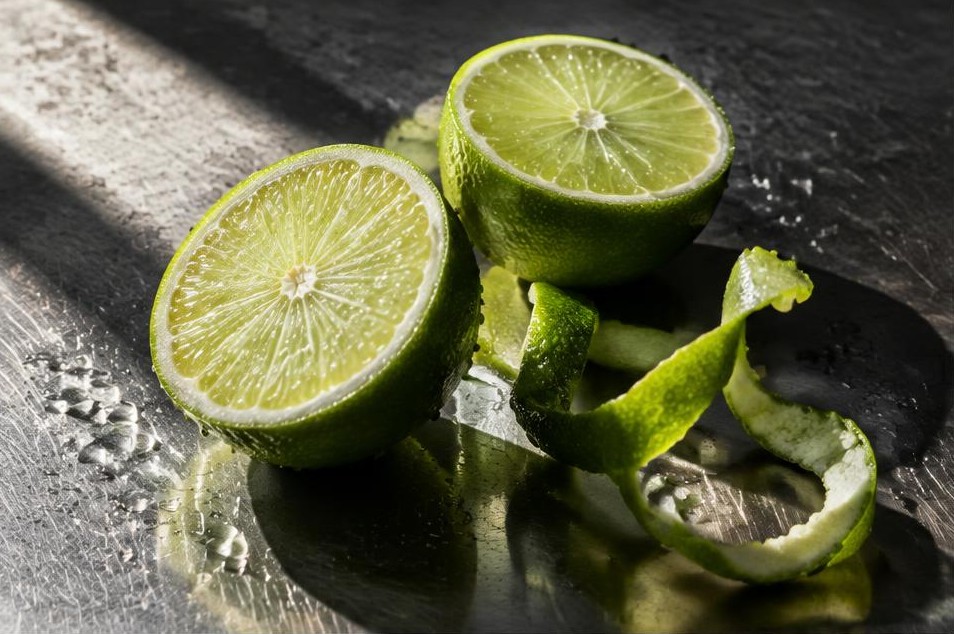
Before you mix, taste each main ingredient by itself. Write one thing you want to keep. Be specific enough that another person could find it. “Smells like pear skin” is a direction. “Refreshing” tells the person very little about which ingredient to reach for. At Kansas State University, researchers developed a coffee lexicon with physical references for its flavour, aroma and texture descriptions. Borrow the habit on a kitchen scale. If you are getting at the scent of lemon peel, put a piece of lemon peel on the table. 3
Trial one. Pear and toasted rice tea
Measure 55 ml of chilled pear juice, 40 ml of cold unsweetened genmaicha and 5 ml of lemon juice. Genmaicha is the green tea with toasted rice sold in tea shops. Stir the three liquids in a small glass. Taste a spoonful, then a proper sip. Can you still pick out the tea after the pear arrives?
Make a second glass with 45 ml of pear juice, 50 ml of the same tea and the same 5 ml of lemon. The total stays at 100 ml. You have changed one decision, the proportion of pear to tea. If the first version gives you the pear you wanted and the second gives you the finish you wanted, try a point between them. There is no need to add another ingredient yet. If both taste thin, try brewing the next portion of tea with more leaf for the same time and remake the version you preferred.
Now try your choice beside the food. Take a bite, then a sip. Does the roast smell return? You may find that the tea you liked by itself is too quiet at the table. Write down which preparation you preferred alongside the dish. A recipe for a particular meal gets to have a different answer from a recipe for an afternoon on its own.
Trial two. Tomato, strawberry and a basil leaf
Hull a few ripe strawberries. Wash and cut a ripe tomato. Blend the fruit separately, then pass each through a clean sieve. Measure 60 ml of the strained tomato, 35 ml of the strawberry and 5 ml of lemon juice. Stir and divide evenly between two small glasses. Fold one washed basil leaf once, set it on the surface of one glass and serve both straight away. Taste the plain glass first, then the one with the leaf.
Ask a friend to smell both before you explain what is in them. Which ingredient did they expect? Which could they actually pick out in the mouth? The basil is there as a suggestion. If you prefer the plainer glass, the experiment has earned its keep. If you want more tomato character, remake the plain version with 70 ml of tomato and 25 ml of strawberry, leaving the lemon at 5 ml. Then decide whether basil still belongs.
Texture deserves a separate trial. Pass half of your preferred mix through a finer sieve and leave half as it is. Use equal pours in matching glasses. Which one would you want as a little drink before eating? Which suits bread rubbed with olive oil? Keep that answer with the recipe. “Strain” is an imprecise instruction if the sieve you choose changes what people like about the drink.
Trial three. Pineapple with a coffee finish
For one small sparkling drink, start with 45 ml of pineapple juice, 20 ml of chilled unsweetened filter coffee, 5 ml of lime juice and 50 ml of chilled sparkling water. Stir the still ingredients together, pour them into a cold glass, then add the sparkling water gently. Serve immediately. Taste for the order in which things appear. Is there enough pineapple at the start? Do you still recognise coffee after you swallow?
Pour a second version with 10 ml of coffee and 60 ml of sparkling water. The volume and fruit stay the same. If you prefer its quieter coffee finish, stop there. If it feels too slight, make one further trial with 15 ml of coffee and 55 ml of water. Use sparkling water from a freshly opened bottle for the comparison and serve the glasses close together. Two pours made twenty minutes apart give the older one another handicap.
The drink may also taste sharp. Try a teaspoon of plain sugar syrup in a small separate sample and compare it with a sample of the same size to which you have added a teaspoon of water. Make the syrup by dissolving equal weights of sugar and water and cooling it first. Sugar can reduce the sourness people perceive in mixtures containing acid. The acid is still present. The comparison tells you whether a sweeter glass tastes any better to you. 4
Keep a page someone else can use
| Write this down | A useful entry |
|---|---|
| Purpose | A small pear drink for fried food |
| Exact version | 50 ml pear, 45 ml genmaicha, 5 ml lemon |
| Preparation | Tea brand, grams of leaf, volume of water, brewing temperature, time and how it was chilled |
| First impression | What you could smell before drinking |
| After the sip | The last ingredient you could still recognise |
| At the table | What changed after a bite or a few minutes |
| Next decision | One quantity or one action to change |
When someone else tastes, ask them to write their first impression before you describe what you hoped to achieve. If you say “notice the toast”, you will never find out whether they would have noticed it on their own. Ask a separate question about pleasure. A friend can identify the toast with perfect accuracy and still prefer a glass with more pear.
When a drink is nearly there
If it smells wonderful but tastes watery, pour a small sample with less added water and compare. If a fruit disappears under the tea or coffee, reduce the louder ingredient in a fresh sample before buying a sweeter fruit. If everyone likes the aroma but leaves the garnish in a pile on the table, try the same scent from a strip of peel briefly folded over the glass. If the first mouthful is beautiful and the last one drags, try a smaller serving of the same recipe. A change in portion costs one clean glass.
Finish by handing your written instructions to someone who has yet to make the drink. Watch for the moment they pause. Which tea? How big a basil leaf? When does the soda go in? Those questions reveal the part of the recipe still living in your hands. Add the answers and let that person pour you a glass. Now you get to find out what it tastes like as a guest.
- Julia Momosé with Emma Janzen, 2021. The Way of the Cocktail
- Dave Arnold, 2014. Liquid Intelligence
- World Coffee Research and the Sensory Analysis Center at Kansas State University. Sensory Lexicon and its reference materials
- Lotika Savant and Mina R. McDaniel, 2004. A tasting study of how different sugars affect perceived sourness