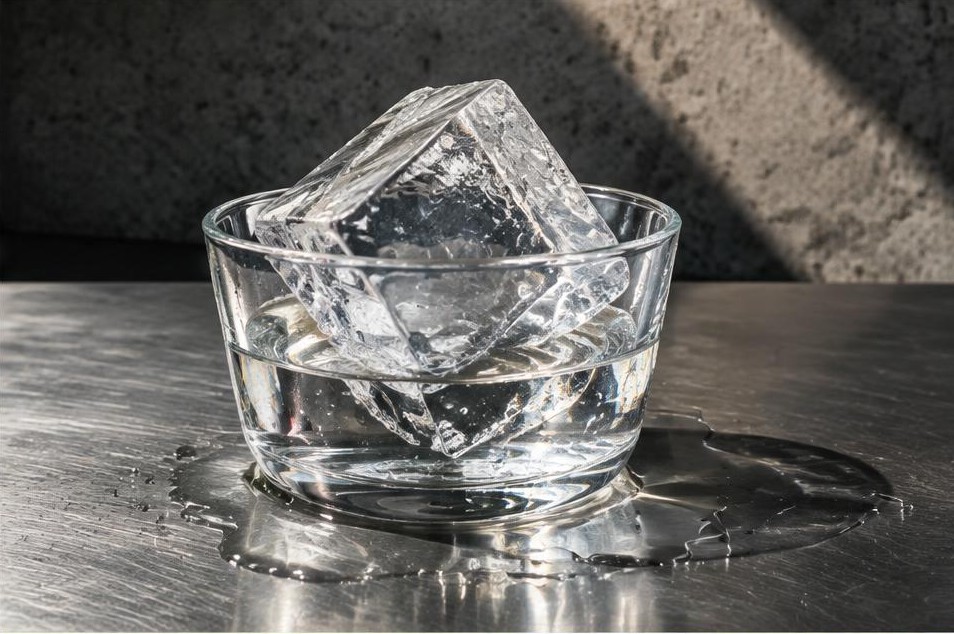
A bartender took crushed ice, put it in a bag with holes, then spun it in a centrifuge. There was a sensible question behind this extraordinary use of equipment. Would crushed ice still water down a drink more than whole cubes if you first got rid of all the water clinging to it? 1
Dave Arnold described the experiment on Cooking Issues in 2009. Equal weights of crushed and whole ice went into equal amounts of tequila. The team shook them equally and strained both samples. With the surface water spun off, the drinks finished at the same measured alcohol concentration. When the experiment was repeated with undried ice, the sample shaken with crushed ice finished a little more diluted. The researchers had found water that could enter a drink before a single piece of ice had time to melt. It was a small bar experiment, carried out with one spirit. Its strongest lesson is how carefully they specified the ice. 1
There are two jobs for ice to do. Straight from a cold freezer, it can absorb some heat as it warms towards its melting point. Once it melts, it takes in heat to change from solid to liquid. A wet scoop from a bar well brings another contribution, the liquid already coating its surfaces. Crushed ice offers a lot of surface for that water to sit on. On a warm table the glass continues to pick up heat, so what happens during a quick shake and what happens during fifteen minutes of conversation are different questions. [1, 2, 3]
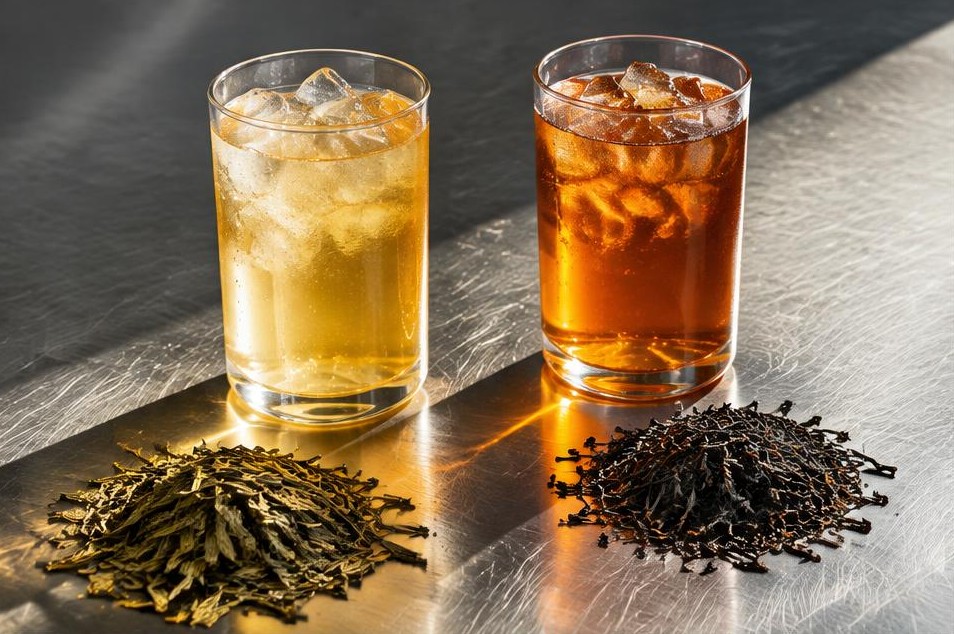
There is an easier experiment to try at home. Make one jug of chilled tea, then measure 100 millilitres into each of three glasses. Add 10 millilitres of chilled water to the first, 20 to the second and 30 to the third. Taste. You are deciding how much water the tea can welcome. Perhaps the driest, strongest sip makes the worst full glass. If you like the middle sample, write down “20 millilitres per 100 of tea”. That instruction will still make sense tomorrow, whatever the weather.
For the next serving, use your usual glass and ice. Taste at the table as soon as you pour, then again after ten minutes. If the end has gone thin, try chilling the tea and glass before the next pour. If the beginning feels too fierce but the finish works, add a measured spoon of cold water at the start. A recipe worthy of a second round should suit the person who pauses to talk.
- Dave Arnold, 2009. The crushed ice experiment and its measurements
- Dave Arnold, 2009. Temperature, dilution and the difference between shaking and resting
- OpenStax, Rice University. The physics of ice melting in a drink