Imagine buying cups for a café. One sample makes your coffee seem sweeter. The decision sounds straightforward until someone asks a second question. Did people actually enjoy it more?
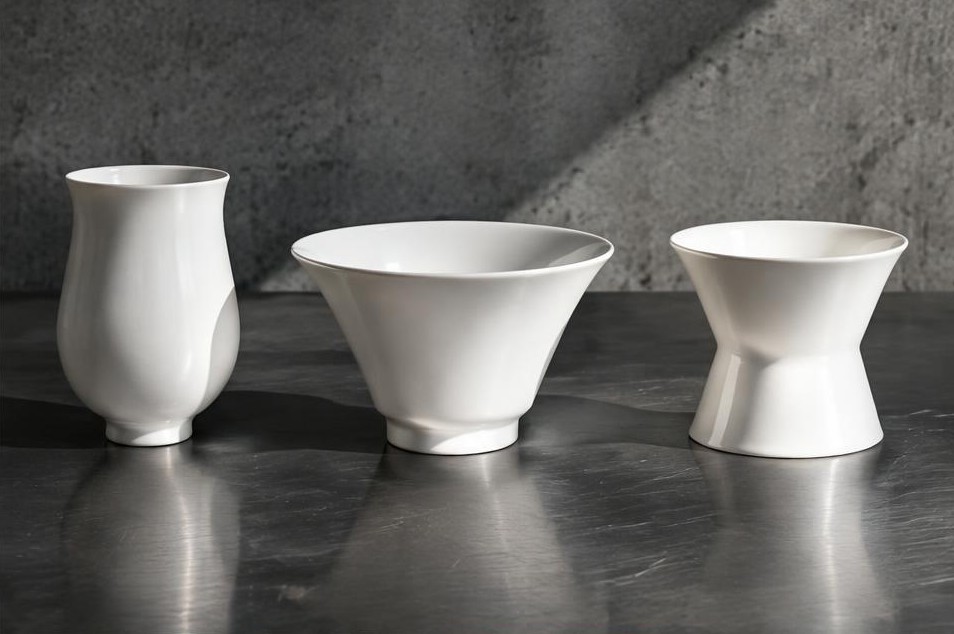
Fabiana Carvalho and Charles Spence tested three white ceramic cup shapes at a specialty coffee event in Brazil. Their analysis included 276 people, a mix of coffee professionals and experienced amateur drinkers. Each person received the same coffee in one of three cups. One narrowed towards the rim like a tulip. A second had an open shape. A third, called the split cup, had a visible waist and a broad opening. Participants rated what they smelled and tasted as well as how much they liked it. 1
The tulip earned higher scores for aroma. The split cup produced higher ratings for both sweetness and acidity. Amateurs gave the split cup their lowest liking score. Among professionals, it did better. The researchers had measured three things that are easy to confuse when choosing tableware. A cup can draw attention to an attribute. A drinker can perceive that attribute more strongly. The drinker can still prefer the coffee in another cup. The group averages tell you little about which one a particular guest will reach for. 1
A study with wine put a different question to the test. Jeannine Delwiche and Marcia Pelchat asked blindfolded participants to smell the same California Cabernet Sauvignon from four glasses. The Bordeaux glass scored lower on total aroma intensity than the other three. The tasters found few other significant differences between the glasses. Those participants judged wine by smell. At your own table you also get the pleasure of seeing, holding and sipping from a glass you love. 2
Try your own cupboard before looking at a catalogue. Pour equal measures from one jug of tea into two cups at the same starting temperature. Choose one with a wide mouth and one with a lip that bends inward. Smell, sip and write down two separate answers. Which has the stronger aroma? Which would you take back to the table? Swap the tasting order for a second person. If the answers differ, hand each person the cup they chose.
Then put both on a tray and walk a few steps. Notice the handle, the slosh and where your fingers land. In a café the cup travels further than the distance between a guest’s hand and their mouth. The person carrying it gets a vote, too.
- Fabiana M. Carvalho and Charles Spence, 2018. Coffee cup shape and how drinkers rated aroma, sweetness, acidity and liking
- J. F. Delwiche and M. L. Pelchat, 2002. A blindfolded comparison of wine aromas in four glasses